Data & Trends · 9 min read · June 1, 2026
The Real Cost of Produce Waste: How Much Money Home Cooks Are Throwing Away Each Month
The average American household tosses out roughly $1,500 worth of food every year — and the bulk of that loss lands squarely in the produce drawer [1][2]. If you already cook at home most nights, that number stings: you're doing everything right except for the part where a bag of spinach silently liquefies behind the yogurt. This post breaks down exactly where that money goes, which specific items are destroying your grocery budget, and why it keeps happening even to people who genuinely try.
- The $1,500 benchmark is well-documented: A widely cited 2014 USDA analysis estimated a four-person household wastes $1,500 per year on food that never gets eaten, a figure the EPA's 2025 update confirms as a reasonable baseline [1][2].
- Fruits and vegetables are the biggest culprit: Fruits and vegetables make up more than a third of all food wasted in the U.S., even though they're often cheaper per item than meat or dairy [3].
- Households drive the problem: ReFED estimates U.S. households waste 23.45 million tons of food per year, making consumers the single largest source of surplus food at 33.5% of the national total [4].
- Per-person cost is significant: On a per-capita basis, the average American wastes roughly 256 pounds of food and about $728 annually — approximately 11% of average annual food spending [4].
- Visibility and planning failures are the root cause: Poor fridge organization, over-buying, and misread date labels are the top self-reported reasons people waste food at home [5].
- Simple systems can close the gap: Apps and meal-planning tools that surface what you already have — especially items nearing their expiration — can dramatically cut the weekly drain.
| Category | Est. Household Waste Share | Typical Items Lost | Key Driver |
|---|---|---|---|
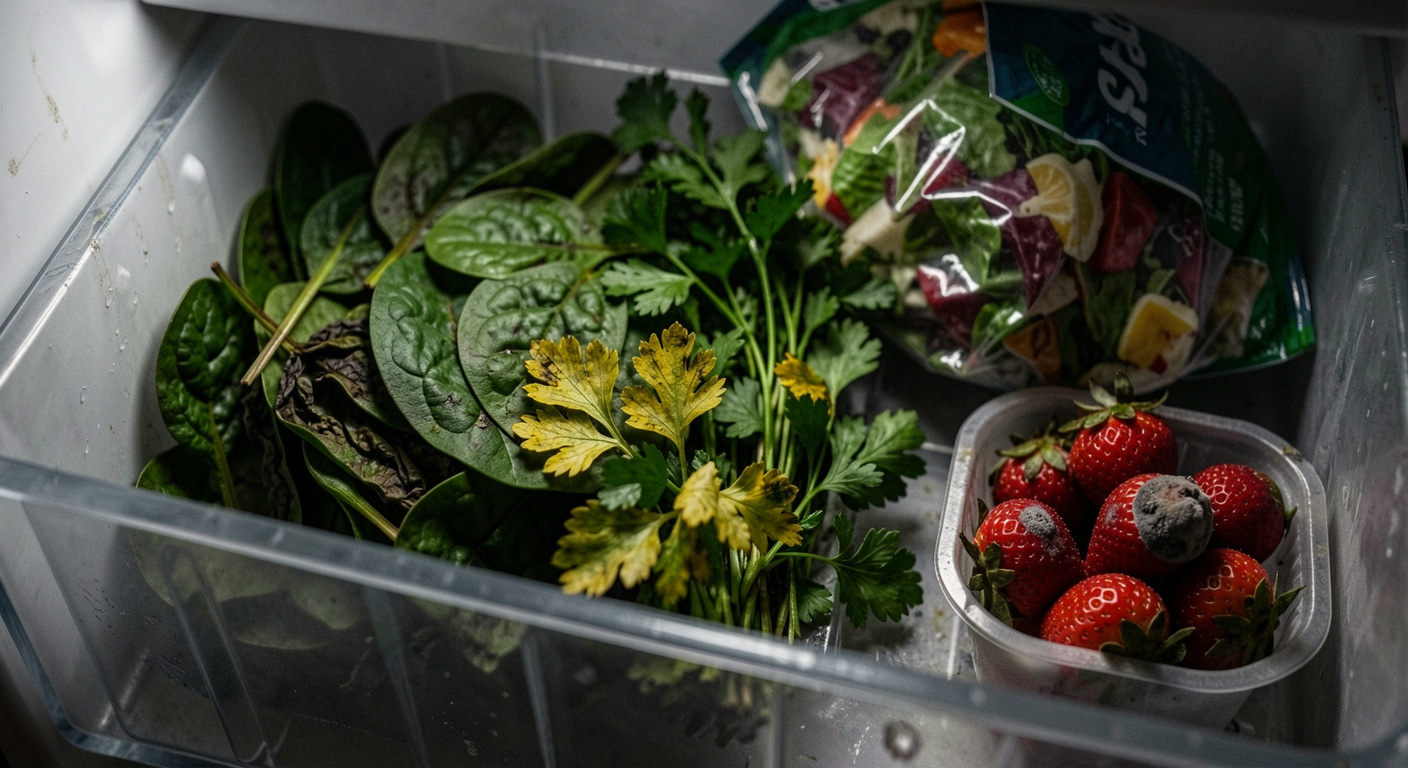
| Fruits & Vegetables | >33% of all food waste [3] | Salad greens, berries, fresh herbs, spinach | Short shelf life + poor fridge visibility |
| Prepared & Leftovers | Significant share of 23.45 M tons [4] | Cooked grains, soups, sauces | Over-cooking, forgotten in back of fridge |
| Dairy & Eggs | 14.2 million tons (2022) [6] | Milk, yogurt, shredded cheese | Misread date labels |
| Dry Goods & Pantry | 10.6 million tons (2022) [6] | Bread, pasta, canned goods | Over-buying on sale |
| Meat & Seafood | 5.08 million tons fresh (2022) [6] | Ground beef, chicken, fish | Forgotten in freezer, spoils quickly |
TL;DR: A family of four wastes about $1,500 on food each year, more than a third of it produce — mostly because of poor fridge visibility, over-buying, and not having a plan for ingredients that are two days from going bad.
The $1,500 Number: Where It Comes From and What It Really Means
The Original USDA Estimate and the EPA's 2025 Update
The $1,500 figure traces back to a landmark 2014 USDA Economic Research Service report that used 2010 price data to estimate how much a four-person household spends on food that ultimately goes uneaten [1][2]. It was the first rigorous attempt to put a dollar value on what Americans were scraping into the trash. The EPA revisited this work in a 2025 report using updated data and a comparable methodology, confirming that the underlying loss rate hasn't improved meaningfully [2].
For a single-person household the annual food waste cost runs $300–$600 [1]. Scale that up to a family of four and you're looking at a figure that dwarfs most monthly streaming, gym, or subscription costs combined. Put differently: the money wasted on food each year could cover several months of groceries for the same household.
How the Per-Person Math Works Out
On a per-capita basis, the numbers are equally sobering. The average American wastes approximately 256 pounds of food per year at a cost of roughly $728 per person — about 11% of average annual food spending [4]. That's more than one in every ten grocery dollars going directly into the trash or compost bin. ReFED puts total U.S. household food waste at 23.45 million tons per year, making consumers the largest single source of surplus food in the entire supply chain at 33.5% of the national total [4].
"Households are responsible for the largest portion — 33.5 percent — of all surplus food." — ReFED, Food Waste: The Problem [4]
Breaking the Loss Down by Food Category
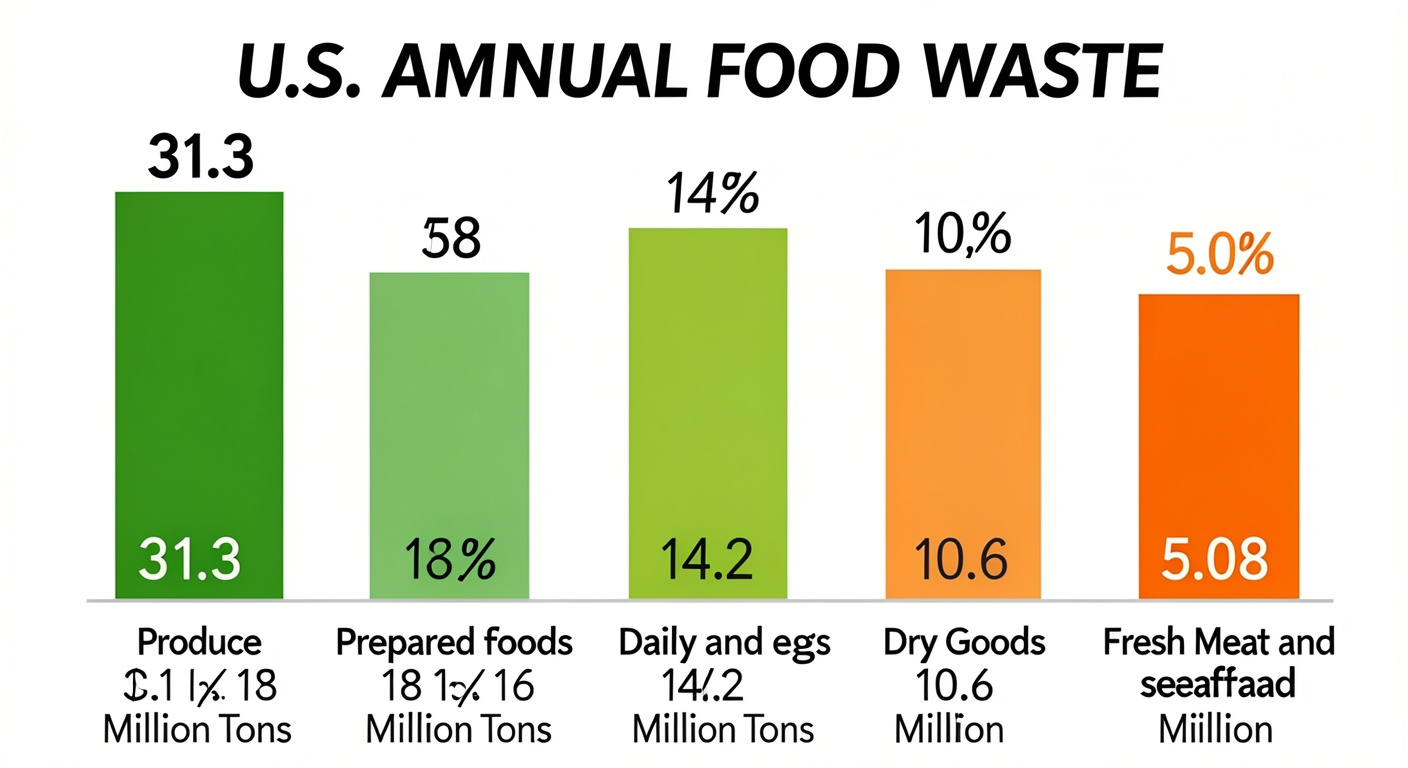
According to 2022 data compiled by researchers tracking the U.S. food system, Americans wasted 31.3 million tons of produce that year, dwarfing every other category [6]. Prepared foods came in second at 18 million tons, followed by dairy and eggs at 14.2 million tons, dry goods at 10.6 million tons, and fresh meat and seafood at 5.08 million tons [6].
Those produce numbers are stunning when you remember that fresh fruits and vegetables are, pound for pound, among the least expensive items in the cart. The volume lost is so enormous precisely because people buy more perishable produce than they can realistically cook before it turns.
The Produce Drawer Problem: Which Specific Items Are Costing You Most
Fruits and Vegetables Are Structurally Over-Wasted
ReFED's data is blunt: fruits and vegetables constitute more than a third of total food waste across the entire supply chain [3]. But at the household level the picture is even more skewed. Research aggregated by FoodPrint finds that households waste 39% of the fruits they purchase and 37% of the vegetables they buy [4]. Think about that: on average, nearly two out of every five pieces of fruit you bring home never gets eaten.
Seafood technically has the highest waste rate — consumers waste 53% of the seafood they buy — but because most households buy far less seafood by volume, the absolute dollar impact of produce waste is larger for the typical family [4].
The Worst Offenders on the Shelf
While comprehensive item-level household data is difficult to collect, food-systems researchers and waste audits consistently point to the same repeat offenders:
| Produce Item | Why It Gets Wasted | Typical Shelf Life | Rescue Window |
|---|---|---|---|
| Bagged salad greens | Pre-washed, looks fresh — bought in bulk, wilts fast | 3–7 days after open | Day 1–2 after opening |
| Fresh herbs (cilantro, parsley, basil) | Used 1 tbsp, rest forgotten in crisper drawer | 5–7 days | Can be frozen or dried |
| Strawberries & soft berries | Impulse purchase, mold spreads fast | 3–5 days | Freeze whole on day 2 |
| Spinach & leafy greens | Bought for salads, forgotten behind taller items | 5–7 days | Wilt into pasta or eggs |
| Cucumbers & zucchini | Large volume, used partially | 5–7 days | Slice and pickle quickly |
| Avocados | Narrow ripe window, bought unripe | 1–2 days when ripe | Mash and freeze |
The unifying thread: these are all impulse or aspirational buys — items grabbed with the best intentions that lose their window while other meals take priority. Frozen food, by contrast, results in 47% less household food waste than fresh food, in part because the extended shelf life removes the urgency pressure [5].
The Invisible Cost of "Almost Bad" Produce
There's a specific moment most home cooks know well: you open the fridge, see the half-bag of wilted spinach, and decide it's not quite worth saving — but also not quite bad enough to feel guilty about tossing. That grey zone is where the $1,500 bleeds out. It's rarely one catastrophic spoilage event; it's a steady drip of "almost bad" produce that never gets cooked in time.
Why It Keeps Happening: The Psychology and Logistics of Food Waste
Poor Visibility Is the #1 Structural Problem
Research consistently points to storing food in less-visible areas as a primary reason people forget to use it before it goes bad [5]. The crisper drawer, designed to preserve humidity, is also a concealment device — out of sight, out of mind. A bunch of carrots pushed to the back of the bottom shelf is effectively invisible to someone opening the fridge for a quick scan at 6 p.m.
This is why "shop your fridge first" advice, while correct, rarely changes behavior on its own. Knowing you should use the wilting herbs doesn't tell you what to make with them tonight in 30 minutes after a long workday.
Misread Date Labels Cause Unnecessary Disposal
Surveys show that more than a third of consumers interpret "best before" to mean "unsafe after," when in reality these labels speak to quality rather than safety [7]. The result: perfectly edible produce — especially hardier items like root vegetables, citrus, and firm greens — gets tossed on schedule rather than by actual condition. The Mental Floss reporting on a University study found that people who frequently cleaned out their refrigerators (often triggered by date labels) actually wasted more food than those who checked labels less rigidly [8].
"The current system of expiration dates misleads consumers to believe they must discard food in order to protect their own safety." — Natural Resources Defense Council, cited in Food Waste Feast [7]
Over-Buying and the Planning Gap
FoodPrint's analysis identifies over-preparing — cooking and serving more food than needed, then not using leftovers — as another top driver of household waste [5]. But the upstream cause is the planning gap: most people shop without a concrete plan for every perishable item, which means aspirational produce buys (the bunch of fresh cilantro for one taco night) never find a second use.
The Cornell Food and Brand Lab has documented how the same cognitive shortcuts that lead people to overbuy at the grocery store — bulk deals, sale pricing, optimistic meal-planning fantasies — also predict higher food waste rates [5]. Buying a two-for-one on romaine lettuce only saves money if you actually make that second salad.
For a practical system that addresses this planning gap head-on, see How to Actually Use Up Vegetables Before They Go Bad (A Weeknight System That Works) — it maps out a day-by-day approach for working through your fridge before anything turns.
What Closing the Gap Actually Looks Like
The Financial Case for Better Fridge Habits
If the average four-person household recovers even half their annual food waste, that's $750 back in the grocery budget every year — without changing what you buy, where you shop, or how much you cook. For a single adult wasting $400–$600 annually, cutting waste by half is the equivalent of two or three free weeks of groceries.
The math is straightforward. The behavior change is harder — which is why passive awareness ("we waste too much food") doesn't work as well as active, in-the-moment prompts that tell you specifically what to cook with what you already have.
Meal Planning Tools That Surface Expiring Ingredients
The most effective food waste interventions at the household level share a common design: they make the "about to expire" items the most visible, most actionable choices available. Whether that's a whiteboard on the fridge, a weekly produce audit, or a digital tool that ranks recipes by what needs to be used up soonest, the mechanism is the same — reduce the friction between "I have aging spinach" and "here's tonight's dinner."
Tools that use fridge photos or simple ingredient entry can surface those options faster than any mental inventory you do while standing in the grocery store aisle. For a quick look at how those two input methods compare, Fridge Photo Apps vs. Manual Ingredient Entry: Which Way to Plan Dinner Actually Saves More Time? walks through the practical tradeoffs.
And if you want to put the numbers to immediate use, 7 Fridge-Clean-Out Recipes You Can Make in 30 Minutes on a Weeknight is a good starting point for turning what's in your crisper drawer right now into an actual meal.
Turning Data Into a Habit
The research is clear on one thing: knowing the statistics doesn't change behavior. A 2022 Gallup/MITRE survey found that awareness of food waste was widespread, yet actual waste rates remained high [6]. The gap between knowing and doing closes when the right information appears at the right moment — specifically, when you're standing in the kitchen at 6 p.m. deciding what to make.
That's the exact problem our weeknight cooking app is built to solve. Snap a photo of your fridge (or type in what you have), and you'll get three 30-minute recipes ranked by which one uses up the most stuff that's closest to going bad. It's the $1,500-a-year problem, solved one weeknight at a time. Try it free — your produce drawer will thank you.
Frequently asked questions
How much food does the average family of four waste per year?▾
A family of four wastes an estimated $1,500 worth of food per year, based on a widely cited 2014 USDA analysis that the EPA's 2025 report confirms is still a reasonable baseline. On a per-person basis, that translates to roughly 256 pounds and $728 annually — about 11% of average food spending.
Which types of food are wasted the most at home?▾
Fruits and vegetables account for more than a third of all food wasted in the U.S. Households waste roughly 39% of the fruit and 37% of the vegetables they purchase. In absolute volume terms, Americans discarded 31.3 million tons of produce in 2022, more than any other food category.
What specific produce items get thrown away most often?▾
The most commonly wasted produce items include bagged salad greens, fresh herbs (cilantro, parsley, basil), soft berries like strawberries, spinach, cucumbers, and avocados. These items share short usable windows and are often bought with a single meal in mind, leaving large quantities unused.
Why do people waste so much produce even when they mean not to?▾
The main drivers are poor fridge visibility (perishables get pushed to the back and forgotten), misread date labels (over a third of consumers think 'best before' means 'unsafe after'), over-buying on sale, and the absence of a concrete plan to use every perishable item purchased.
How much money could I save by cutting my food waste in half?▾
If a four-person household recovers half its annual food waste, that's roughly $750 back in the grocery budget per year. For a single adult wasting $400–$600 annually, halving waste is equivalent to two or three free weeks of groceries.
Does knowing about food waste actually help people waste less?▾
Not by itself. Research and survey data show that awareness of food waste is widespread, yet actual waste rates remain high. The most effective interventions surface expiring ingredients at the moment of cooking decisions — turning awareness into an immediate, actionable dinner plan.
Sources
- Food Waste Statistics 2026: Numbers That Will Change How You Think – Reencle
- EPA Updates Data On Cost Of Household Food Waste | BioCycle
- Food Waste Data — Causes & Impacts | ReFED
- Food Waste Is a Massive Problem — Here's Why | FoodPrint
- Tackling Food Waste at Home | The Nutrition Source – Harvard T.H. Chan School of Public Health
- Food Waste in America: What You Need to Know | One5C
- Why We Waste: Ugly Food, Expiration Dates and More | Food Waste Feast
- We're Wasting More Than Half the Food In Our Refrigerators, Says New Study | Mental Floss
Keep reading
Ready to see it for yourself?
Back to home →